
The “Invisible Hero” of High-Performance Coatings: Mastering Substrate Wetting with SailAdditive S-Series

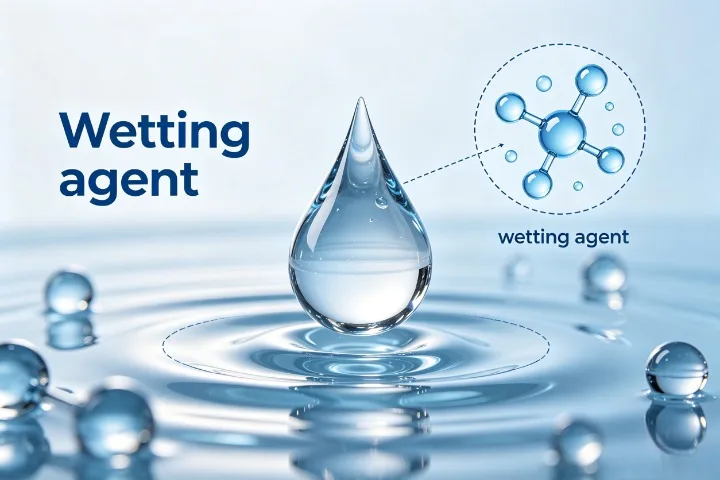
While formulators often pour significant effort into pursuing "visible" performance indicators like high gloss, high hardness, and fast drying, an often-underestimated "invisible hero"—the substrate wetting agent—fundamentally determines the success or failure of a coating.
A wetting agent doesn't directly contribute to final mechanical properties, but it lays the first cornerstone for the perfect presentation of all performance characteristics. As environmental regulations tighten and waterborne applications reach more difficult-to-adhere substrates, precise wetting solutions like the SailAdditive S-Series have become more critical than ever.
1. Poor Wetting: The Source of "Headache-Inducing" Coating Defects
When a coating cannot spread evenly on a substrate, problems follow in rapid succession. Industry research indicates that poor wetting is a common cause of various film defects:
- Cratering and Fisheyes: Localized surface tension imbalance causes the coating to retract, forming crater-like defects.
- Poor Adhesion: The coating fails to penetrate and anchor into the microscopic pores of the substrate, leading to weak bonding.
- Poor Leveling: Uneven spread makes it difficult to eliminate orange peel and brush marks.
- Uneven Penetration: On porous substrates like wood or mortar, this leads to uneven color and gloss differences.
These challenges amplify as waterborne technology moves toward low surface energy substrates like plastics, composites, and parts with old coatings.
2. The Art of Balancing Dynamic Wetting and Compatibility
Selecting a wetting agent involves far more than just looking at a static surface tension value. The key lies in dynamic surface tension reduction capability.
An excellent wetting agent must quickly migrate to the newly formed liquid-solid interface during application. However, formulators must be wary of "side effects." Poor compatibility can lead to foam stabilization or affect intercoat adhesion. The ideal solution achieves a delicate balance between efficient migration and system harmony.
3. SailAdditive Solutions: High-Performance Product Spotlight
Based on a deep understanding of wetting mechanisms, SailAdditive offers targeted support for different complex scenarios.
- С-270: The Universal Precision Wetting Agent
For high-precision applications like automotive paints and inkjet inks, SailAdditive S-270 stands out as a high-performance polyether-modified polymer.
- Broad Compatibility: It demonstrates superior compatibility with acrylic resins, nitrocellulose, and polyurethane systems.
- Versatile Systems: Specifically engineered for water-borne, solvent-based, solvent-free, and UV-curable formulations.
- Primary Uses: Ideal for automotive, industrial, wood, and decorative coatings.
- Technical Profile: A light yellow to amber transparent liquid with a non-volatile matter content of 100%.
S-608: The "Superspreader" for Advanced Coverage
When extreme surface tension reduction is required, SailAdditive S-608 (a polyether-modified polydimethylsiloxane copolymer) provides "super-extended" wettability.
- Rapid Coverage: It drastically reduces surface tension, allowing for a significant increase in effective surface area.
- Agricultural & Industrial Power: While it excels in agrochemicals by promoting stomatal penetration in plants, it is equally effective in solvent-based and water-based coatings and leathers.
- Efficiency: Its unique chemical stability prevents runoff and enhances rainfastness in agricultural applications.
4. Usage & Application Framework
To avoid batch quality incidents, we recommend incorporating wetting agents early in the formulation development stage.
Feature | ||
Chemistry | Polyether-modified polymer | Polyether-modified silicone |
Recommended Dosage | 0.1% – 0.5% of total formula | 0.01% – 0.5% of total formula |
Best For | Inkjet, Automotive, Wood | Superspreading, Agrochemicals |
Viscosity (25°C) | 20–100 | 20–80 |
Incorporation Method: Always add the additive during the paint mixing stage to ensure optimal distribution throughout the system.
Conclusion: Choosing Your "Opening Act"
Choosing a suitable wetting agent is like selecting a reliable "opening act" for your coating. It works silently in the background but determines whether the entire performance stage is level and stable.
Whether you are tackling plastic adhesion or wood penetration, SailAdditive provides the molecular design needed for modern waterborne challenges.
What substrate challenge are you currently tackling? Contact our technical staff today to conduct relevant tests and find your perfect match.