How to Fix Fish-Eyes in Epoxy Coatings? The Ultimate Solution for Flawless Finishes

In the world of high-performance flooring and industrial coatings, few things are as frustrating as finishing a large epoxy application only to discover fish-eyes (shrinkage cavities). These small, circular craters not only ruin the aesthetic of your work but can also compromise the protective integrity of the coating.
If you are struggling with surface defects in your epoxy projects, this guide will help you understand why they happen and how to eliminate them using professional-grade additives.
The Core Pain Point: Why Do Fish-Eyes Appear?
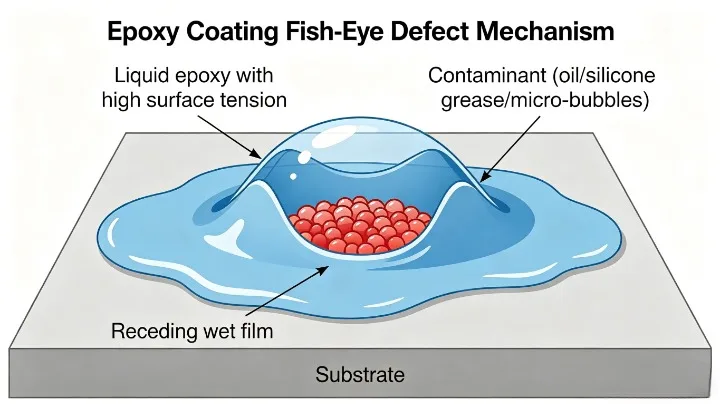
Fish-eyes, also known as shrinkage cavities, are primarily the result of surface tension inconsistencies.
When the surface tension of the liquid epoxy is significantly higher than that of a localized area—often caused by contaminants like oil, silicone grease, or even micro-bubbles—the wet film "pulls back" from the low-tension spot. This receding action creates the characteristic crater or "fish-eye" appearance.
For professionals, this isn't just a visual flaw; it is a signal that the coating is not wetting the substrate properly, which can lead to adhesion failure over time.
The Professional Solution: Meet S-6830
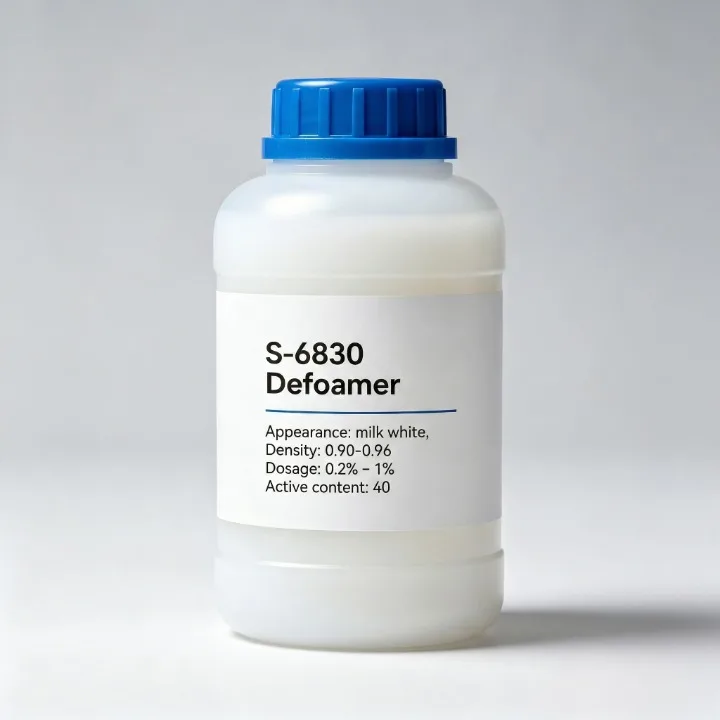
To achieve a flawlessly smooth film, you need an additive that can bridge these surface tension gaps. We recommend S-6830, a high-performance solution specifically engineered for complex resin systems like epoxy. and S-6830 TDS for your download.
S-6830 works by rapidly reducing surface tension inconsistencies throughout the coating. Its unique chemical structure allows it to:
Prevent Fish-Eyes: It effectively stops the formation of shrinkage cavities, ensuring a smooth and aesthetically pleasing finish.
Break Micro-Foam: It rapidly eliminates macro-bubbles and micro-foam generated during high-shear manufacturing or application.
Preserve Adhesion: Unlike many traditional additives, S-6830 ensures it does not affect interlayer adhesion, making it ideal for multi-coat industrial and decorative processes.
Technical Excellence: Polyether-Modified Silicone Technology
What makes S-6830 so effective compared to standard defoamers? The secret lies in its composition as a Polyether-modified silicone polymer.
This advanced molecular structure combines the powerful surface-active properties of silicone with the high compatibility of polyether. Because it is a polyether-modified polysiloxane, it offers exceptional "bubble-breaking" capabilities without causing the compatibility issues common with pure silicone oils.
Its technical profile is built for demanding environments:
Exterior: Milk white appearance.
Compatibility: Exhibits excellent compatibility within diverse resin systems.
Stability: High non-volatile matter content (approx. 40%) ensures lasting performance during the curing stage.
Application Tips for Success
To get the best results with S-6830 in your epoxy or water-based systems, follow these professional guidelines:
Recommended Dosage: We suggest adding 0.2% to 1% of the total formula.
Incorporation: Always add S-6830 during the paint mixing stage to ensure optimal distribution throughout the system.
Versatility: Beyond epoxy, it is highly effective for water-based paints, inks, and leather coatings.
Conclusion: No More Compromises on Surface Quality
Don't let surface tension issues dictate the quality of your work. By integrating a high-performance polyether-modified defoamer like S-6830 into your formulation, you can eliminate fish-eyes and deliver a professional, smooth-as-glass finish every time.
Ready to optimize your coating performance? Visit SailAdditive.com to explore our full range of technical solutions or contact our team for expert advice on your next project.