
Surface Additives

Surface Additives: Transforming Industry Performance Through Advanced Chemical Solutions
Surface additives have become indispensable components across manufacturing sectors, fundamentally changing how products perform and endure. These specialized chemical compounds modify surface properties to deliver enhanced functionality, from scratch resistance in automotive coatings to slip enhancement in packaging films. As industries demand higher performance standards, surface additives continue to evolve, offering innovative solutions that address complex technical challenges.
The global surface additives market reached $9.8 billion in 2023 and is projected to grow at 5.2% CAGR through 2030, according to Grand View Research. This growth reflects increasing awareness of how surface modification technologies can reduce costs, improve product quality, and meet stringent environmental regulations.
Understanding Surface Additives and Their Core Functions
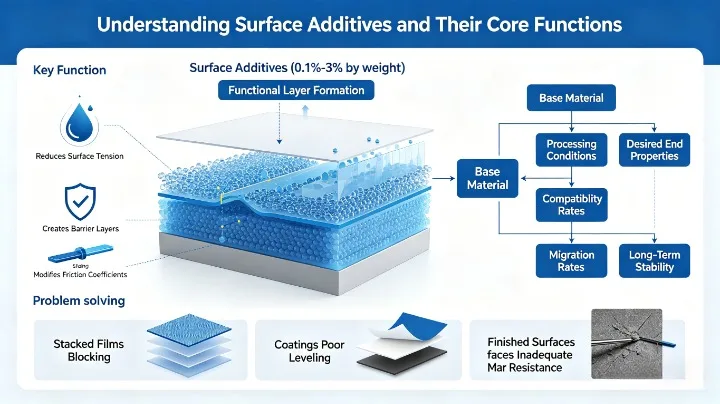
Surface additives are specialized chemical compounds added in small concentrations to modify the interface properties of materials. They work by migrating to surfaces during application or processing, creating functional layers that alter physical and chemical characteristics.
These additives typically represent only 0.1% to 3% of a formulation by weight, yet their impact on final product performance is substantial. They function through various mechanisms, including reducing surface tension, creating barrier layers, and modifying friction coefficients.
The effectiveness of surface additives depends on proper selection based on the base material, processing conditions, and desired end properties. Formulators must consider compatibility, migration rates, and long-term stability when incorporating these compounds into their products.
Understanding the chemistry behind surface modification enables manufacturers to solve persistent problems like blocking in stacked films, poor leveling in coatings, or inadequate mar resistance in finished surfaces.
Key Types of Surface Additives in Modern Manufacturing
Slip and Anti-Blocking Agents
Slip additives reduce the coefficient of friction between surfaces, enabling smooth handling and processing. Common slip agents include erucamide and oleamide, which migrate to film surfaces to create lubricating layers.
Anti-blocking agents prevent adjacent surfaces from sticking together. Silica particles and talc are frequently used, creating microscopic surface roughness that minimizes contact area.
Wetting and Leveling Agents
These additives reduce surface tension, promoting uniform spreading of coatings and inks. Silicone-based and fluorinated surfactants deliver excellent substrate wetting, ensuring defect-free films.
Polyether-modified siloxanes have gained popularity for balancing wetting performance with coating appearance. They minimize cratering and orange peel effects while maintaining gloss levels.
Defoaming and Air Release Agents
Foam formation during processing creates defects and reduces efficiency. Defoaming agents destabilize foam by penetrating bubble walls and promoting rapid collapse.
Silicone-based defoamers offer broad effectiveness but require careful dosing to prevent surface defects. Mineral oil-based alternatives provide better compatibility in certain systems.
Industry Applications Driving Market Growth
Automotive and Transportation
The automotive sector represents 23% of surface additive consumption globally. Scratch-resistant clearcoats rely on silicone and wax-based additives to protect exterior finishes from mechanical damage.
Interior components benefit from anti-fingerprint and easy-clean additives that maintain appearance with minimal maintenance. These formulations reduce cleaning frequency while enhancing perceived quality.
Electric vehicle battery components increasingly incorporate surface additives for thermal management and insulation properties, representing a growing application segment.
Packaging and Films
Flexible packaging consumes significant volumes of slip and anti-blocking additives. High-speed filling lines require consistent friction properties to maintain productivity rates exceeding 1,000 packages per minute.
Food-contact regulations, including FDA 21 CFR and EU 10/2011, govern which additives are permissible in direct food packaging applications. Manufacturers must ensure compliance throughout the supply chain.
Industrial Coatings
Protective coatings for infrastructure and equipment depend on surface additives for performance in harsh environments. Anti-corrosion formulations incorporate specialized additives that enhance barrier properties and adhesion.
The industrial coatings segment demands additives with excellent chemical resistance and long-term stability. Accelerated weathering tests validate performance over projected service lifetimes of 15-20 years.
Emerging Trends Shaping the Future of Surface Additives
Bio-Based and Sustainable Solutions
Environmental concerns are driving development of renewable surface additives. Plant-derived slip agents from vegetable oils offer performance comparable to petroleum-based alternatives while reducing carbon footprints.
Evonik, BASF, and Dow have introduced bio-based product lines responding to sustainability mandates. These products achieve 40-60% renewable content while meeting existing performance specifications.
Circular economy principles influence additive development, with manufacturers exploring recyclability-compatible formulations that don’t compromise post-consumer material quality.
Nanotechnology Integration
Nano-structured additives deliver enhanced functionality at lower loading levels. Nano-silica particles provide superior anti-blocking performance while maintaining optical clarity in transparent films.
Self-healing surface technologies incorporate micro-encapsulated additives that release upon mechanical damage, restoring protective properties automatically. This technology shows particular promise for automotive clearcoats.
Multifunctional Additive Systems
Single additives delivering multiple benefits reduce formulation complexity and cost. Combined slip/anti-static packages eliminate compatibility concerns while simplifying inventory management.
Research indicates multifunctional additives will comprise 35% of the market by 2028, up from 18% in 2022. This trend reflects manufacturers’ desire for streamlined supply chains.
Selecting the Right Surface Additives for Your Application
Performance Requirements Analysis
Begin selection by clearly defining required surface properties. Quantify targets using standardized tests: coefficient of friction (ASTM D1894), blocking force (ASTM D3354), or surface energy measurements.
Consider end-use conditions including temperature exposure, chemical contact, and mechanical stress. Additives must maintain functionality throughout the product lifecycle.
Compatibility and Processing Considerations
Test compatibility early in development to avoid costly reformulations. Small-scale trials reveal potential issues like haze development, bloom formation, or processing difficulties.
Processing temperatures affect additive migration and distribution. Some compounds require specific thermal histories to achieve optimal surface enrichment.
Cost-Performance Optimization
Balance performance requirements against total formulation costs. Premium additives often deliver value through reduced loading requirements or extended service life.
Work with supplier technical teams to optimize dosage levels. Over-addition wastes money and may cause unwanted effects like reduced adhesion or print receptivity.
Sustainability and Regulatory Considerations
Regulatory compliance shapes additive selection across industries. REACH registration in Europe, TSCA requirements in the United States, and evolving Asian regulations create complex compliance landscapes.
Volatile organic compound (VOC) restrictions increasingly affect traditional additive chemistries. Water-based and high-solids formulations require specialized surface additives compatible with these systems.
Extended producer responsibility regulations make recyclability a design consideration. Additives must not interfere with recycling streams or contaminate recovered materials.
Life cycle assessment tools help quantify environmental impacts of different additive choices. Manufacturers incorporating sustainability metrics into selection processes gain competitive advantages with environmentally conscious customers.
Industry bodies including the American Coatings Association and European Plastics Converters provide guidance on best practices for sustainable additive use.
FAQ
What concentration of surface additives should I use in my formulation?
Optimal concentrations typically range from 0.1% to 3% by weight, depending on additive type and application requirements. Start at supplier-recommended levels and adjust based on performance testing. Over-addition can cause surface defects, reduced adhesion, or compatibility problems. Conducting systematic dose-response studies identifies the minimum effective concentration for cost optimization.
How do surface additives affect coating adhesion and printability?
Surface additives can impact adhesion by modifying surface energy. Silicone-based additives particularly may reduce paint adhesion or ink receptivity if over-applied. Select additives specifically designed for your application and test adhesion properties thoroughly. Some manufacturers offer “adhesion-friendly” grades that balance surface modification with bondability requirements.
Are bio-based surface additives as effective as conventional options?
Modern bio-based surface additives achieve 85-95% of conventional product performance in most applications. Renewable slip agents from vegetable sources perform comparably to synthetic amides. While some performance gaps exist in extreme conditions, ongoing development continues closing these differences. Bio-based options often command price premiums of 15-25% but may qualify products for sustainability certifications valued by end consumers.