What Is A Defoamer? The Key to Flawless Industrial Coatings and High-Quality Casting

In the world of high-performance coatings and precision casting, tiny air bubbles are often the “invisible killers” of quality. Whether you are perfecting the smoothness of an industrial floor or the mirror-like finish of automotive paint, success depends on one core additive: the Defoamer.
What is a Defoamer?
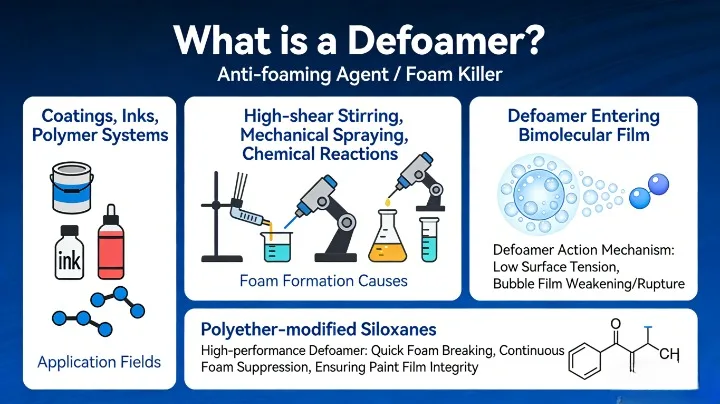
A defoamer, also known as an anti-foaming agent, is a chemical additive designed to inhibit foam formation and eliminate existing bubbles. During the production and application of coatings, air easily becomes trapped due to high-shear mixing, mechanical spraying, or chemical reactions. This creates both large macro-bubbles and stubborn micro-foam.
Defoamers work by entering the bubble’s wall (lamella) with extremely low surface tension. This causes the bubble wall to weaken and rupture instantly. High-performance options—such as polyether-modified siloxanes—not only break bubbles but also provide long-term foam suppression. This ensures the structural integrity and aesthetic beauty of your final film.
Core Applications: Products and Industries
Choosing the right defoamer is a precise process. You must match the additive to your resin system and environmental demands to ensure a flawless finish.
1. Choosing by Resin System
Based on DongGuan SailAdditive technical standards, your choice depends on your base material:
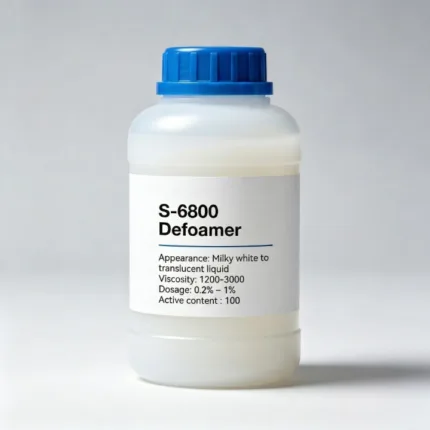
Solvent-Free and High-Solid Systems: For thick epoxy systems, S-6800 (a special polysiloxane polymer) delivers maximum air release even at ultra-low dosages.
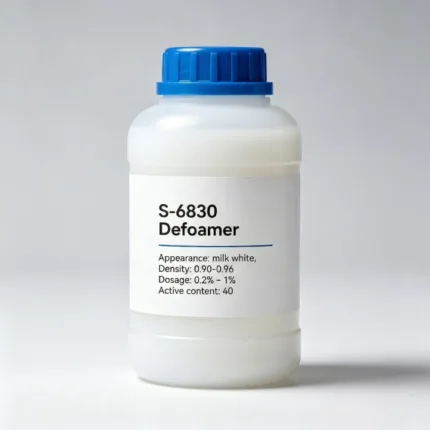
Water-Borne Systems: S-6830 is a polyether-modified polysiloxane ideal for water-based paints and inks. It eliminates foam without compromising interlayer adhesion.
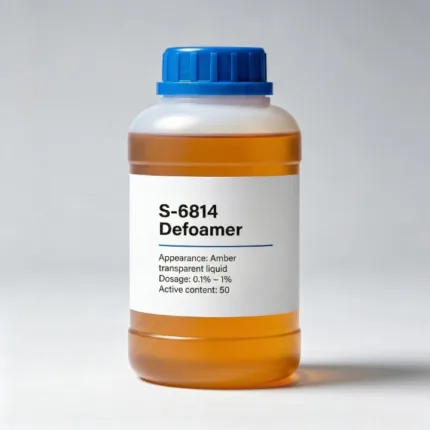
Silicone-Free Requirements: If your system is sensitive to silicone or requires maximum recoatability, S-6814 (a non-silicon defoamer) is the ideal choice. It prevents defects like fish-eyes and shrinkage cavities.
Chemically Demanding Systems: For epoxy and polyurethane systems, S-066N modified silicone offers exceptional resistance to acids and alkalis.
2. Critical Manufacturing Stages
Defoamers perform vital roles during specific stages:
High-Shear Mixing: They eliminate air entrained during pigment dispersion and blending.
Ambient Curing: In industrial flooring or mineral casting, they ensure bubbles escape before the material sets.
Multi-Coat Painting: They maintain surface tension balance, ensuring excellent adhesion between multiple paint layers.
3. Diverse Industrial Fields
Construction and Flooring: Essential for self-leveling systems and polymer concrete to ensure a bubble-free surface.
Automotive and Wood: Used in OEM finishes and furniture coatings to eliminate micro-foam and showcase high-gloss color.
Inks and Packaging: Prevents printing defects or uneven color in specialized inks.
Anti-Corrosion and Leather: Improves the density and chemical resistance of heavy-duty industrial coatings.
Expert Comparisons and Recommendations
In the global market, formulators often look for high-performance benchmarks. For example, the BYK-066N is a widely recognized silicone-based defoamer used for solvent-borne systems. Similarly, our S-066N and S-6800 are engineered to provide comparable “bubble-breaking” efficiency for professional industrial applications.
How to Use for Optimal Performance
Penggabungan: Always add the defoamer during the paint mixing stage to ensure optimal distribution.
Dosage: Standard dosages typically range from 0.1% to 1% of the total formula.
Testing: Because resin systems vary, always conduct compatibility tests before full-scale use.
Visit sailadditive.com to explore our full range of additives, or contact us for technical support.