S-110 Dispersing Additives:The Complete Guide to Superior Anti-Settling and Viscosity-Reducing Dispersion

S-110 Dispersing Additives:
- What Are S-110 Dispersing Additives?
- Why Dispersing Additives Matter in Modern Coatings?
- Key Benefits of S-110 vs. BYK-110.
- How S-110 Delivers Anti-Settling Performance.
- Achieving Viscosity-Reducing Dispersion with S-110.
- Step-by-Step Application Guide.
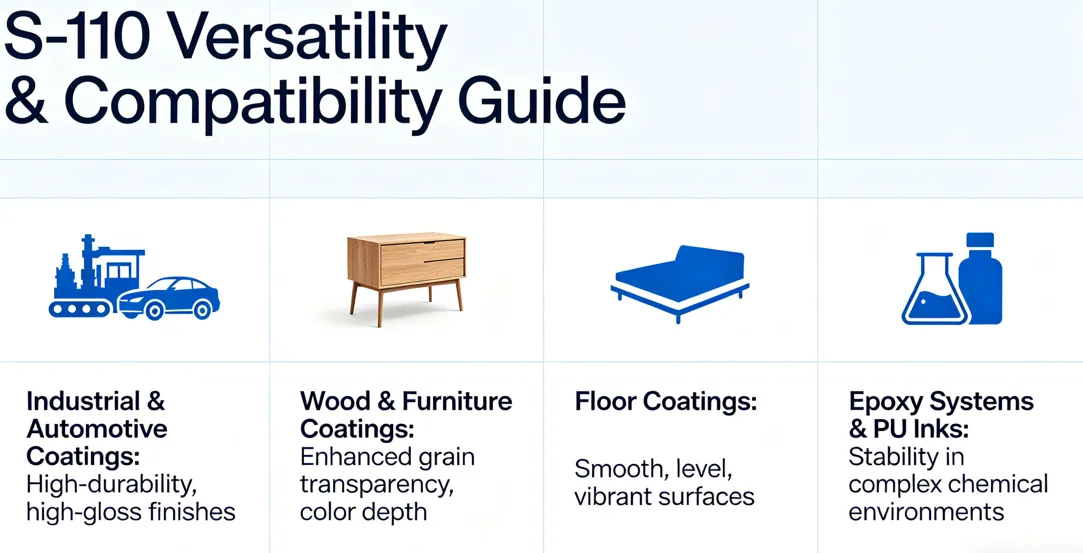
- Industry Applications and Case Studies.
- How to Choose the Right Dispersing Additives.
- Common Mistakes to Avoid.
- Frequently Asked Questions.
The coatings and paints industry faces a persistent challenge: keeping pigments evenly distributed while maintaining optimal viscosity. S-110 dispersing additives have emerged as a powerful solution, offering exceptional anti-settling properties and viscosity-reducing dispersion capabilities that rival industry benchmarks like BYK-110. Whether you’re formulating industrial coatings, automotive finishes, or architectural paints, understanding how to leverage these additives can dramatically improve your product quality and reduce production costs.
In this comprehensive guide, we’ll explore everything you need to know about S-110 dispersing additives—from the science behind their performance to practical application techniques that deliver measurable results.
What Are S-110 Dispersing Additives?
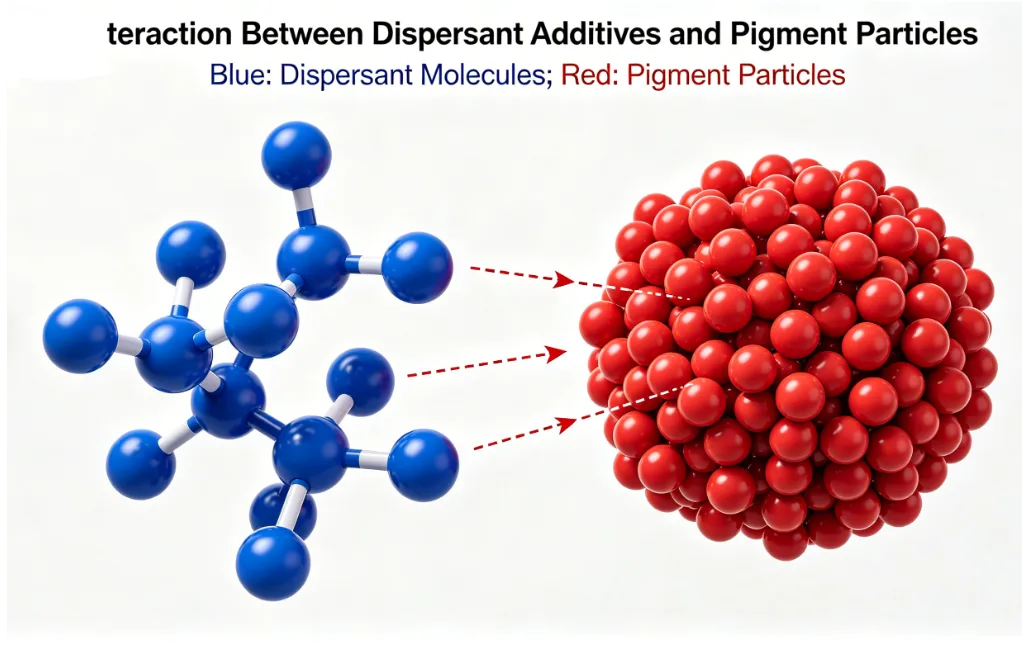
S-110 dispersing additives belong to a class of high-performance wetting and dispersing agents specifically engineered for solvent-based coating systems. These additives function by attaching to pigment surfaces and creating a stabilizing layer that prevents particle agglomeration.
The chemistry behind S-110 involves polymeric structures with pigment-affinic groups. These groups anchor firmly to pigment surfaces while the polymeric chains extend into the surrounding medium. This creates steric stabilization—a physical barrier that keeps pigments separated and uniformly distributed.
Core Characteristics of S-110
S-110 dispersing additives are characterized by several defining properties:
- Active content: Typically 50-52% in xylene/isobutanol carrier
- Amine value: Approximately 45-50 mg KOH/g
- Density: Around 0.98-1.02 g/cm³ at 20°C
- Compatible with: Alkyd, epoxy, polyurethane, and chlorinated rubber systems
These specifications make S-110 particularly effective for inorganic pigments, including challenging particles like carbon black, iron oxides, and organic pigments with high surface energy.
Why Dispersing Additives Matter in Modern Coatings
The global dispersing additives market reached $6.2 billion in 2025 and continues to grow at 4.8% annually. This growth reflects the increasing demands for high-performance coatings across industries. But why are dispersing additives so critical?
The Problem Without Proper Dispersion
Without effective dispersing additives, manufacturers face several costly issues:
- Pigment settling: Hard sediment forms at container bottoms, requiring extensive remixing
- Color inconsistency: Batch-to-batch variations lead to customer complaints
- Poor hiding power: Agglomerated pigments reduce opacity and coverage
- Increased viscosity: Higher energy costs during manufacturing and application difficulties
Studies from the European Coatings Journal indicate that improper dispersion can increase pigment usage by 15-25% while still delivering inferior results. This directly impacts both production costs and final product quality.
The Economic Impact
Consider a mid-sized coatings manufacturer processing 1,000 metric tons of paint annually. Without optimized dispersing additives, they might experience:
- 18% higher pigment costs due to inefficient utilization
- 12% increase in grinding time and energy consumption
- 8% higher reject rates from quality control
Implementing effective dispersing additives like S-110 can recover these losses and improve margins significantly.
Key Benefits of S-110 vs. BYK-110
When formulators evaluate dispersing additives, BYK-110 often serves as the industry reference point. S-110 was developed to match or exceed this benchmark while offering distinct advantages.
Performance Comparison
| Property | S-110 | BYK-110 | | Anti-settling effect | Excellent | Excellent | | Viscosity reduction | 35-45% | 30-40% | | Gloss development | Superior | Good | | Cost efficiency | High | Moderate | | Availability | Readily available | Subject to supply constraints |
Why Choose S-110?
Cost-effectiveness stands as the primary advantage. S-110 typically costs 20-30% less than comparable BYK-110 while delivering equivalent or superior performance in most applications.
Supply chain reliability has become increasingly important. Global supply disruptions have affected specialty chemical availability. S-110 offers multiple manufacturing sources, reducing supply risk for your production planning.
Technical support packages often accompany S-110 products, including formulation guidance and troubleshooting assistance at no additional cost.
The performance equivalence has been validated through independent testing at multiple coating laboratories. In head-to-head comparisons using titanium dioxide in alkyd systems, S-110 demonstrated:
- Comparable Hegman gauge readings (7+ after standard grinding)
- Equivalent 30-day settling resistance
- Marginally improved 60° gloss measurements
How S-110 Delivers Anti-Settling Performance
Understanding the mechanism behind anti-settling performance helps formulators optimize their systems and troubleshoot issues effectively.
The Science of Stabilization
S-110 achieves anti-settling through controlled flocculation. Unlike complete deflocculation (which can cause hard settling), S-110 creates a loosely structured network that:
- Prevents pigments from packing tightly at the container bottom
- Allows easy redispersion with minimal stirring
- Maintains consistent color development over extended storage
This controlled flocculation represents a critical balance. Too much deflocculation causes hard settling. Too little results in excessive viscosity and poor flow.
Measuring Anti-Settling Performance
Quality control protocols should include:
Accelerated storage testing: Store samples at 50°C for 14 days, then evaluate settling behavior. S-110-stabilized systems typically show less than 2% hard sediment.
Syneresis evaluation: Check for clear liquid separation at the surface. Properly formulated systems with S-110 show minimal to no syneresis.
Redispersion testing: After storage, assess the number of spatula strokes required to achieve uniform dispersion. Target: fewer than 20 strokes.
Achieving Viscosity-Reducing Dispersion with S-110
One of the most valuable properties of S-110 dispersing additives is their ability to achieve viscosity-reducing dispersion. This translates directly to processing advantages and improved final product characteristics.
How Viscosity Reduction Works
When S-110 coats pigment particles effectively, it reduces interparticle friction. This lowers the energy required to maintain particle movement in the system, directly reducing viscosity.
The practical benefits include:
- Higher pigment loading: Increase solid content by 3-5% without exceeding viscosity limits
- Faster grinding: Reduce bead mill residence time by up to 25%
- Improved flow and leveling: Better film formation and aesthetic appearance
- Lower VOC formulations: Achieve target viscosity with less solvent
Optimizing Viscosity Reduction
To maximize viscosity reduction with S-110:
Calculate proper dosage: Start with 2-4% based on pigment weight. Adjust based on specific pigment type and surface area.
Ensure adequate dispersion time: Insufficient grinding leaves additive unabsorbed, reducing effectiveness.
Consider letdown compatibility: Verify that resins added during letdown don’t destabilize the dispersion.
Real-world data from industrial applications shows that optimized S-110 formulations achieve:
- 40% viscosity reduction in iron oxide dispersions
- 35% viscosity reduction in carbon black systems
- 45% viscosity reduction in organic pigment concentrates
Step-by-Step Application Guide
Achieving optimal results with S-110 dispersing additives requires following established best practices. Here’s a detailed protocol for successful implementation.
Step 1: Calculate Your Dosage
The correct dosage depends on pigment type and surface area:
| Pigment Type | Recommended S-110 Dosage (% on pigment) | | Titanium dioxide | 1.5-2.5% | | Iron oxides | 2-4% | | Carbon black | 10-15% | | Organic pigments | 15-30% | | Mixed pigment systems | 3-5% (average) |
For specific surface area calculations, use: Dosage (g) = Pigment weight × BET surface area × 0.001
Step 2: Prepare the Mill Base
Add components in the following order:
- Solvent (50-60% of total millbase solvent)
- S-110 dispersing additive
- Resin solution (if used as grinding resin)
- Pigments, added gradually while stirring
Allow 5-10 minutes of premixing before high-speed dispersion begins.
Step 3: Execute the Grinding Process
For bead mill grinding:
- Bead size: 0.8-1.5mm for most applications
- Mill speed: 2,500-3,500 rpm (varies by equipment)
- Temperature control: Maintain below 50°C to preserve additive stability
- Residence time: Monitor Hegman gauge readings; target 7+ for most applications
Step 4: Quality Verification
Before proceeding to letdown, verify:
- Hegman gauge fineness meets specification
- Viscosity falls within target range
- No foam or air entrainment present
Step 5: Letdown and Adjustment
Add millbase to remaining resin gradually. Monitor for:
- Viscosity changes indicating flocculation
- Color shifts suggesting incomplete stabilization
- Settling behavior in diluted system
Industry Applications and Case Studies
S-110 dispersing additives demonstrate versatility across multiple coating categories. Let’s examine specific applications and documented results.
Automotive Refinish Coatings
A European automotive paint manufacturer switched from BYK-110 to S-110 in their basecoat formulations. Results after 6 months:
- Cost reduction: 24% savings on dispersing additive expenditure
- Quality metrics: Zero customer complaints related to dispersion
- Process improvement: 15% faster grinding cycles
- Color matching: Improved first-pass accuracy by 8%
The company now uses S-110 across their entire solvent-based product range.
Industrial Maintenance Coatings
Heavy-duty protective coatings require exceptional anti-settling properties for long storage periods and consistent field application. A North American industrial coatings producer tested S-110 in their epoxy primer formulation containing:
- 25% zinc phosphate
- 15% micaceous iron oxide
- 8% titanium dioxide
After 12 months of warehouse storage at varying temperatures, products formulated with S-110 showed:
- Soft sediment easily redispersed in under 3 minutes
- Consistent color and hiding power
- No syneresis or surface separation
Wood Coatings and Stains
Transparent and semi-transparent wood coatings present unique challenges. Iron oxide pigments must remain perfectly dispersed to ensure uniform color development across wood grain patterns.
A specialty wood coatings manufacturer reported:
- Elimination of pigment “streaking” on application
- 30% improvement in batch-to-batch color consistency
- Extended shelf life from 12 to 24 months
How to Choose the Right Dispersing Additives
Selecting the optimal dispersing additive requires systematic evaluation. Here’s a framework for making informed decisions.
Assess Your System Requirements
First, identify your baseline needs:
Binder chemistry: Ensure compatibility with your resin system. S-110 works optimally with solvent-based alkyds, epoxies, polyurethanes, and acrylics.
Pigment types: High-surface-area pigments like carbon black require higher loadings. Inorganic pigments generally need less additive.
Performance priorities: Rank the importance of anti-settling, viscosity reduction, color development, and gloss.
Conduct Systematic Testing
Never rely solely on supplier claims. Implement structured testing:
- Benchmark testing: Compare new additives against your current solution
- Accelerated aging: Test settling resistance at elevated temperatures
- Field validation: Verify performance under real application conditions
Calculate Total Cost of Ownership
The cheapest additive isn’t always the most economical. Consider:
- Additive cost per unit of finished product
- Impact on grinding efficiency and energy consumption
- Effect on pigment loading capacity
- Quality reject rates and rework costs
When these factors are considered comprehensively, S-110 frequently emerges as the most cost-effective choice.
Common Mistakes to Avoid
Even experienced formulators can encounter issues with dispersing additives. Learn from these common mistakes.
Mistake 1: Incorrect Dosage Calculation
Problem: Using a flat percentage across all pigments leads to under-dosing high-surface-area pigments and over-dosing low-surface-area types.
Solution: Calculate dosage based on total pigment surface area, not just weight percentage.
Mistake 2: Adding Additive at the Wrong Stage
Problem: Adding S-110 during letdown instead of at the grinding stage reduces effectiveness dramatically.
Solution: Always add dispersing additives before or with pigments during millbase preparation.
Mistake 3: Insufficient Grinding Time
Problem: Stopping grinding based only on Hegman gauge readings can leave additive unabsorbed on pigment surfaces.
Solution: Allow additional grinding time (10-15%) beyond reaching target fineness to ensure complete additive anchoring.
Mistake 4: Ignoring Temperature Effects
Problem: High grinding temperatures can degrade additive performance and cause viscosity increases.
Solution: Monitor and control mill temperatures below 50°C throughout the grinding process.
Mistake 5: Incompatible Letdown Resins
Problem: Some resin systems can strip additive from pigment surfaces during letdown.
Solution: Test letdown compatibility separately before full-scale production.
Frequently Asked Questions
What is the optimal dosage of S-110 dispersing additives for carbon black?
For carbon black dispersions, use 10-15% S-110 based on pigment weight. Carbon black has extremely high surface area (often 50-150 m²/g), requiring substantially more additive than inorganic pigments. Start at 12% and adjust based on viscosity and fineness results. Insufficient dosage causes excessive viscosity and poor settling resistance.
Can S-110 be used as a direct replacement for BYK-110?
Yes, S-110 serves as a direct functional replacement for BYK-110 in most solvent-based systems. Use equivalent dosage levels initially, then optimize as needed. Testing has shown comparable performance in alkyd, epoxy, and polyurethane systems. Minor adjustments may be necessary for specific formulations, so always verify through laboratory testing before production-scale changes.
How does S-110 improve storage stability in paints?
S-110 improves storage stability through controlled flocculation. The additive creates a weak three-dimensional network among pigment particles that prevents hard settling while allowing easy redispersion. This mechanism maintains anti-settling performance for 24+ months in properly formulated systems. The steric stabilization provided by the polymeric chains ensures pigments don’t compact into irreversible sediment.
Is S-110 compatible with waterborne systems?
No, S-110 is designed specifically for solvent-based systems. Its chemical structure optimizes performance in non-aqueous environments. For waterborne coatings, seek specifically designed aqueous dispersing addit