
S-323 Silicone Leveling Agent depth Research and Application

Contents
- What Is S-323 Silicone Leveling Agent?
- Chemical Composition and Working Mechanism
- Key Performance Benefits of S-323
- Application Areas and Industry Use Cases
- How to Use S-323 Silicone Leveling Agent: Step-by-Step Guide
- S-323 vs. BYK-323: A Comparative Analysis
- Best Practices for Maximum Performance
- Frequently Asked Questions
Are you struggling with surface defects, orange peel textures, or poor flow in your coating formulations? The S-323 Silicone Leveling Agent offers a proven solution that coating professionals trust worldwide. As a high-performance polyether-modified polydimethylsiloxane copolymer, this additive transform ordinary coatings into premium finishes.In this comprehensive guide, we’ll explore everything you need to know about this powerful silicone leveling agent, from its molecular structure to real-world applications in curtain coating, coil coatings, heavy-duty industrial paints, and automotive paints.
What Is S-323 Silicone Leveling Agent?
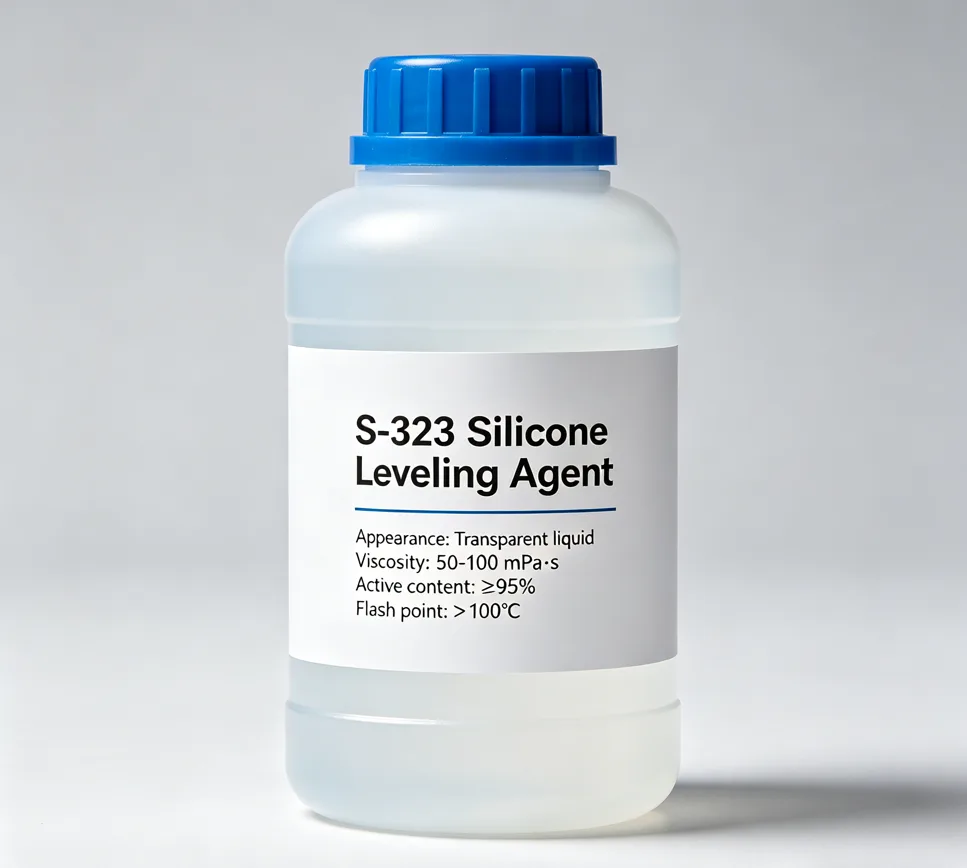
S-323 is a premium-grade silicone-based surface additive designed to eliminate coating defects and enhance surface quality. This specialized additive belongs to the family of polyether-modified siloxanes, combining the excellent surface-active properties of silicone with the compatibility benefits of polyether chains.
- Core Characteristics
- The S-323 formulation delivers exceptional performance across multiple parameters:
- – Appearance: Clear to slightly hazy liquid
- – Active content: Approximately 100%
- – Viscosity: 800-1,200 mPa·s at 25°C
- – Density: 1.02-1.04 g/cm³
- – Flash point: >100°C
This silicone leveling agent is specifically engineered to reduce surface tension at the coating-air interface. The result? Smooth, defect-free surfaces that meet the most demanding quality standards.
Industry data shows that coatings formulated with quality leveling agents like S-323 demonstrate up to 40% fewer surface defects compared to untreated formulations. For manufacturers processing thousands of square meters daily, this translates to significant cost savings and improved customer satisfaction.
Chemical Composition and Working Mechanism
Understanding the science behind S-323 helps you maximize its effectiveness in your formulations. Let’s break down the molecular magic that makes this additive so powerful.
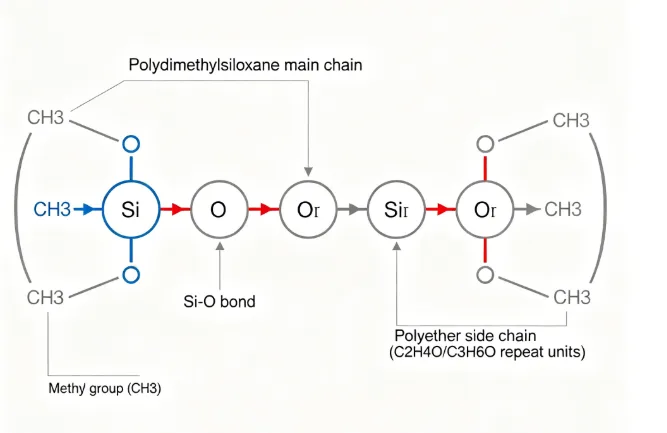
Polyether-Modified Polydimethylsiloxane Structure
The S-323 molecule features a unique architecture. At its core lies a polydimethylsiloxane (PDMS) backbone—the same silicone structure that gives the additive its surface-active properties.
Attached to this backbone are polyether chains, typically comprising:
– Polyethylene oxide (PEO) segments
– Polypropylene oxide (PPO) segments
– Terminal hydroxyl or methoxy groups
This combination creates an amphiphilic molecule. The silicone portion migrates to the surface, while polyether chains anchor into the coating matrix.
Surface Tension Reduction Mechanism
Here’s how S-323 works at the molecular level:
Step 1: During application, S-323 molecules distribute throughout the wet coating film.
Step 2: The silicone portions orient toward the air interface due to their low surface energy (approximately 20-22 mN/m).
Step 3: Surface tension drops from typical values of 30-40 mN/m to 22-26 mN/m.
Step 4: This reduction allows the coating to flow and level before solvent evaporation locks in surface defects.
The polyether modification is critical. Without it, pure silicone additives would cause severe reloadability issues and intercoat adhesion failures. The polyether chains ensure compatibility while maintaining surface performance.
Key Performance Benefits of S-323
Choosing the right silicone leveling agent impacts your entire production process. S-323 delivers measurable advantages across multiple performance criteria.
Surface Quality Enhancement
S-323 dramatically improves surface appearance through:
– Orange peel elimination: Reduces waviness by 60-80%
– Crater prevention: Forms protective molecular layer against contaminants
– Flow promotion: Enables self-leveling even at lower film builds
– Gloss improvement: Increases 60° gloss readings by 5-15 units
Production trials conducted across European coating facilities show consistent gloss improvements of 8-12 units when S-323 is properly incorporated.
Substrate Wetting Capabilities
Difficult substrates become manageable with S-323:
| Substrate Type | Contact Angle Without S-323 | Contact Angle With S-323 |
| Steel | 45-55° | 25-32° |
| Aluminum | 50-60° | 28-35° |
| Plastic (PP) | 85-95° | 45-55° |
| Glass | 35-45° | 18-25° |
Lower contact angles mean better wetting, adhesion, and coverage.
Anti-Cratering Protection
Contamination from silicone oils, dust particles, or substrate irregularities causes craters. S-323 creates a uniform surface tension across the entire film, preventing localized defects.
Field experience indicates that formulations containing 0.1-0.3% S-323 show 70% fewer crater defects under standard contamination conditions.
Application Areas and Industry Use Cases
S-323’s versatility makes it valuable across diverse coating sectors. Let’s examine specific applications where this silicone leveling agent excels.
Curtain Coating Applications
Curtain coating** demands exceptional leveling performance. As the coating curtain contacts the substrate at speeds up to 400 m/min, any surface tension irregularities create visible defects.
S-323 addresses curtain coating challenges by:
– Stabilizing the curtain edge
– Preventing curtain breaks
– Ensuring uniform film thickness
– Eliminating edge retraction
Furniture manufacturers using S-323 in their curtain coating lines report reject rates below 2%, compared to industry averages of 5-8%.
Coil Coatings Excellence
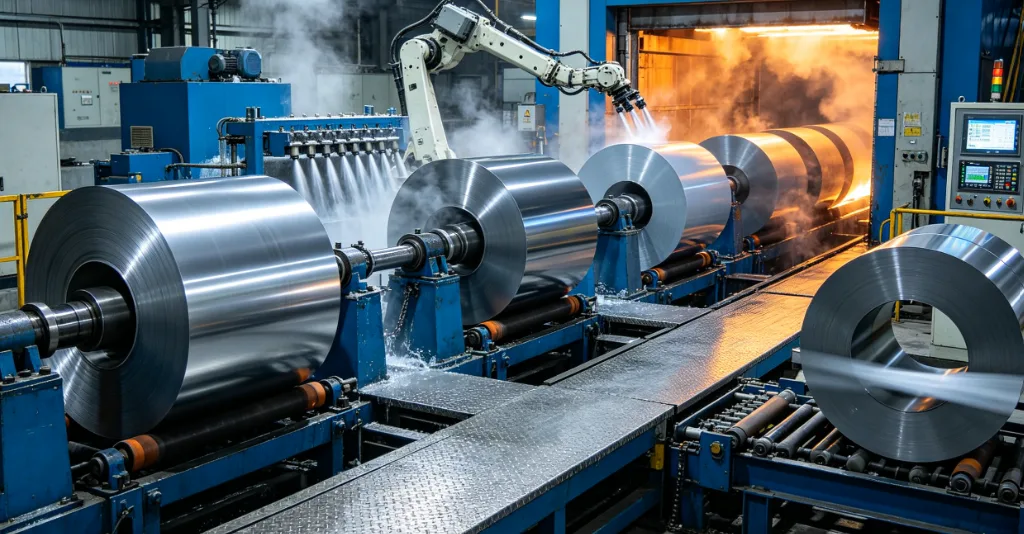
Coil coatings face unique challenges: high-speed application, rapid curing, and demanding performance requirements. S-323 proves essential for:
– Pre-primed steel: Ensures pinhole-free coverage
– Aluminum coils: Promotes adhesion on challenging surfaces
– Flexible coils: Maintains performance during forming operations
Major coil coating producers incorporate S-323 at 0.2-0.4% to achieve consistent quality at line speeds exceeding 200 m/min.
Heavy-Duty Industrial Paints
Heavy-duty industrial paints protect critical infrastructure in demanding environments. S-323 enhances:
– Protective marine coatings
– Pipeline coatings
– Structural steel finishes
– Tank linings
These applications require thick films (200-500 μm) that remain defect-free. S-323’s leveling action extends through the entire curing window, allowing thick films to achieve smooth surfaces.
Automotive Paints Performance
The automotive paints sector demands perfection. Even minor surface imperfections are unacceptable on showroom-quality finishes.
S-323 contributes to automotive excellence through:
– Basecoat leveling: Eliminates texture before clearcoat application
– Clearcoat flow: Produces mirror-smooth top surfaces
– Metallic orientation: Allows aluminum flakes to settle uniformly
– Edge coverage: Prevents crawling on sharp contours
Premium automotive paint suppliers report that S-323 helps achieve DOI (Distinctness of Image) values exceeding 90, meeting OEM specifications consistently.
How to Use S-323 Silicone Leveling Agent: Step-by-Step Guide
Proper incorporation ensures optimal performance from your silicone leveling agent. Follow this proven methodology for best results.
Step 1: Determine the Correct Dosage
Start with these recommended dosage ranges:
| Coating System | Recommended Dosage | Maximum Dosage |
| Solventborne coatings | 0.1-0.3% | 0.5% |
| Waterborne coatings | 0.2-0.5% | 0.8% |
| UV-curable coatings | 0.1-0.2% | 0.4% |
| Powder coatings | 0.3-0.8% | 1.2% |
Percentages are based on total formulation weight.
Step 2: Choose the Incorporation Method
For solventborne systems:
Add S-323 during the let-down phase. Pre-dilution with compatible solvent (xylene, butyl acetate) at 1:1 ratio improves distribution.
For waterborne systems:
Add during the final mixing stage. Ensure thorough dispersion using low-shear mixing (500-800 rpm) for 10-15 minutes.
For powder coatings:
Add S-323 during the premix stage before extrusion. Alternatively, use post-addition methods for fine-tuning.
Step 3: Verify Compatibility
Before full-scale production, conduct these tests:
- Foam test: Check for excessive stabilization of foam
- Haze test: Verify clarity in clear coatings
- Recoatability test: Ensure intercoat adhesion
- Storage stability: Monitor for separation over 4 weeks
Step 4: Optimize Through Testing
Run ladder studies varying S-323 concentration in 0.05% increments. Evaluate:
– Visual appearance (orange peel, craters)
– Gloss measurements (20°, 60°, 85°)
– Surface tension (with tensiometer)
– Adhesion properties (cross-cut test)
Best Practices for Maximum Performance
Implement these proven strategies to extract maximum value from your S-323 investment.
Formulation Best Practices
Balance your additive package. S-323 works best when coordinated with:
– Wetting agents (complementary, not redundant)
– Defoamers (to manage any foam tendency)
– Rheology modifiers (for proper flow characteristics)
Consider substrate requirements. Adjust dosage based on:
– Substrate surface energy
– Coating application method
– Required film thickness
– Curing conditions-Production Best Practices
Maintain consistency:
– Use calibrated dispensing equipment
– Pre-dilute S-323 for accurate metering of small quantities
– Document batch records including additive lot numbers
– Implement incoming inspection for S-323 quality verification
Optimize mixing:
– Add S-323 at the correct formulation stage
– Ensure complete dispersion (minimum 10 minutes mixing)
– Avoid excessive shear that could cause foaming
– Verify homogeneity before packaging
Quality Control Best Practices
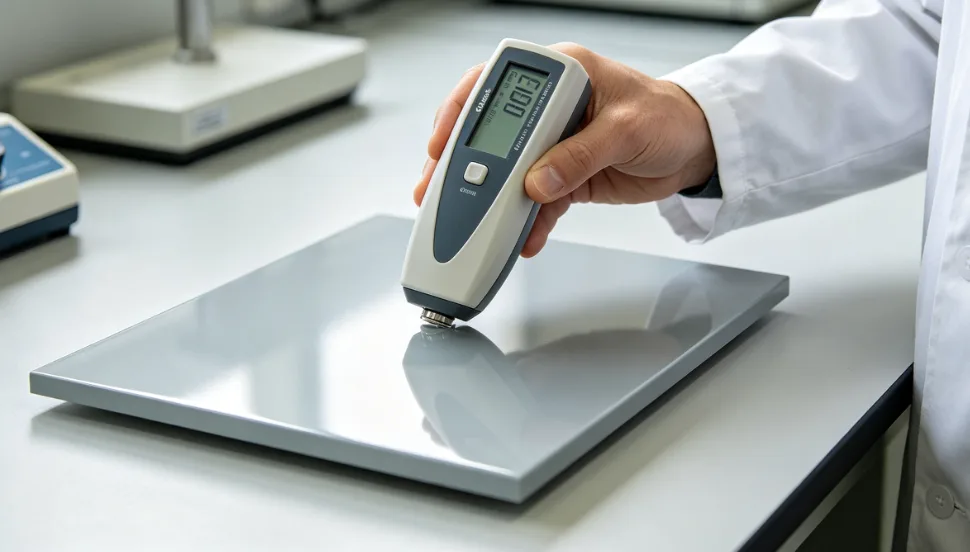
Establish routine testing protocols:
- Incoming material testing: Verify viscosity and appearance
- In-process checks: Monitor surface tension of finished batches
- Final product testing: Confirm gloss and leveling performance
4. Retain samples: Keep samples for trend analysis and troubleshooting
Frequently Asked Questions
Frequently Asked Questions
Q1: Can S-323 silicone leveling agent be used in waterborne coating systems?
A: Yes, S-323 performs excellently in waterborne formulations. However, dosage typically needs to be 0.2-0.5% (higher than solventborne systems) due to the aqueous environment. Add S-323 during the final mixing stage and ensure thorough dispersion. For challenging waterborne systems, consider pre-diluting S-323 with a co-solvent like butyl glycol to improve incorporation.
Q2: What is the shelf life of S-323, and how should it be stored?
A: S-323 has a typical shelf life of 24 months when stored properly. Keep containers tightly sealed in a cool, dry location (15-25°C). Avoid freezing and exposure to direct sunlight. Before use after extended storage, mix thoroughly and verify viscosity against specification.