The Art of Leveling: Mastering Surface Perfection in Waterborne Coatings and Inks

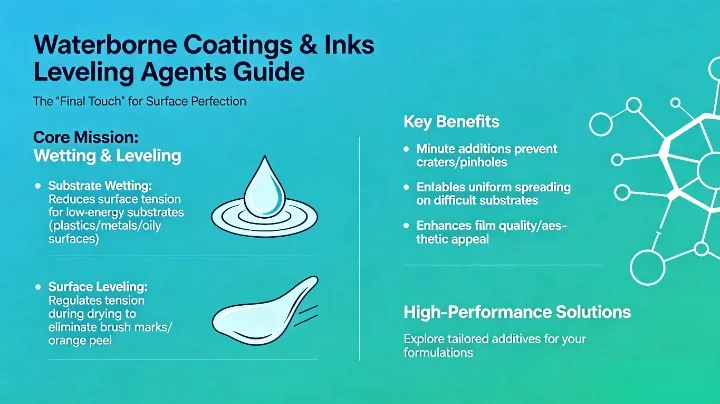
In the formulation of waterborne coatings and inks, leveling agents act as the "final touch" that determines a product’s first impression. Although added in minute quantities, these additives are crucial for eliminating surface defects like craters and pinholes, ensuring uniform spreading on difficult substrates, and achieving high-quality film performance.
Choosing the right "leveling assistant" can significantly expand your product’s application latitude and aesthetic appeal. This guide explores the principles of waterborne leveling and highlights high-performance solutions for your formulations.
1. The Core Mission: Wetting and Leveling
The performance of leveling agents in waterborne systems focuses on two primary functions:
Substrate Wetting: These agents reduce the surface tension of the coating or ink, allowing it to spread fully across the surface. This is critical for low-energy substrates like plastics, metals, or oily surfaces, where poor wetting leads to crawling and adhesion failure.
Surface Leveling: During the drying process, leveling agents regulate surface tension uniformity to eliminate brush marks and "orange peel," resulting in a smooth, high-gloss finish
2. Main Types of Waterborne Leveling Agents
Silicone Surfactants: These are powerhouses for reducing surface tension. They solve stubborn cratering issues and are ideal for substrates like waxed paper or oily steel.
Acrylic Leveling Agents: Known for broad compatibility, they improve leveling without affecting recoatability or causing haze in clear coats.
Polyether-Modified Siloxanes: These offer a balance of wetting, leveling, and surface slip, making them versatile for various industrial applications.
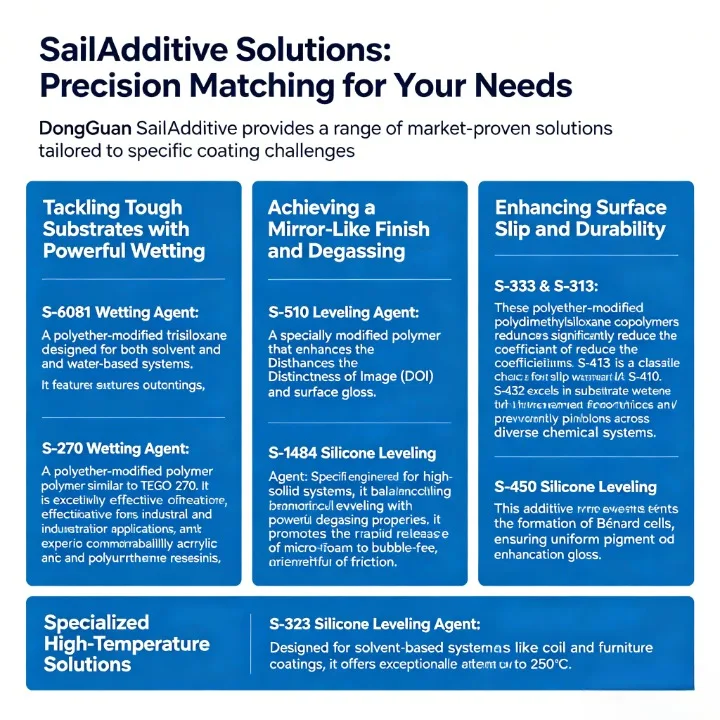
3. SailAdditive Solutions: Precision Matching for Your Needs
DongGuan SailAdditive provides a range of market-proven solutions tailored to specific coating challenges.
Tackling Tough Substrates with Powerful Wetting
When spreading and cratering are your primary obstacles, high-performance wetting agents are essential:
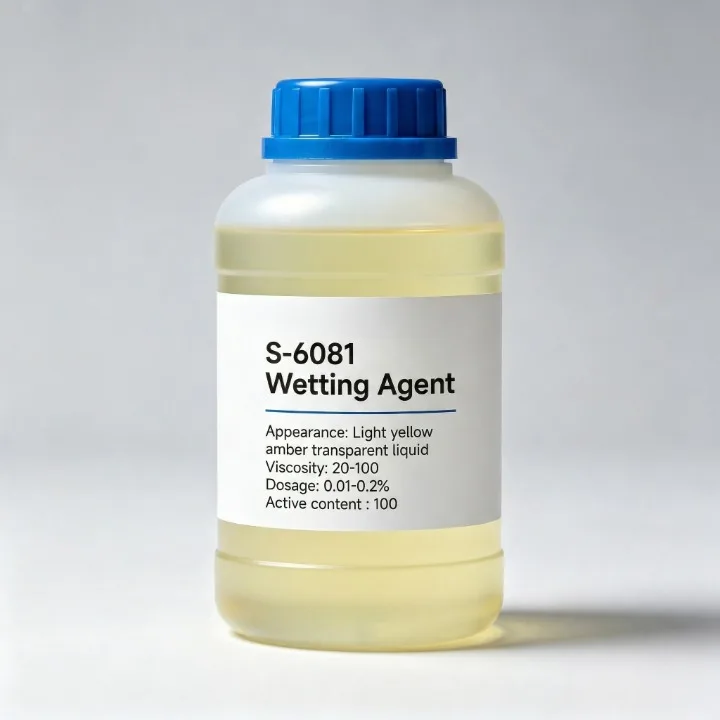
S-6081 Wetting Agent: A polyether-modified trisiloxane designed for both solvent and water-based systems. It features outstanding acid and alkali resistance, ensuring stability in demanding chemical environments.
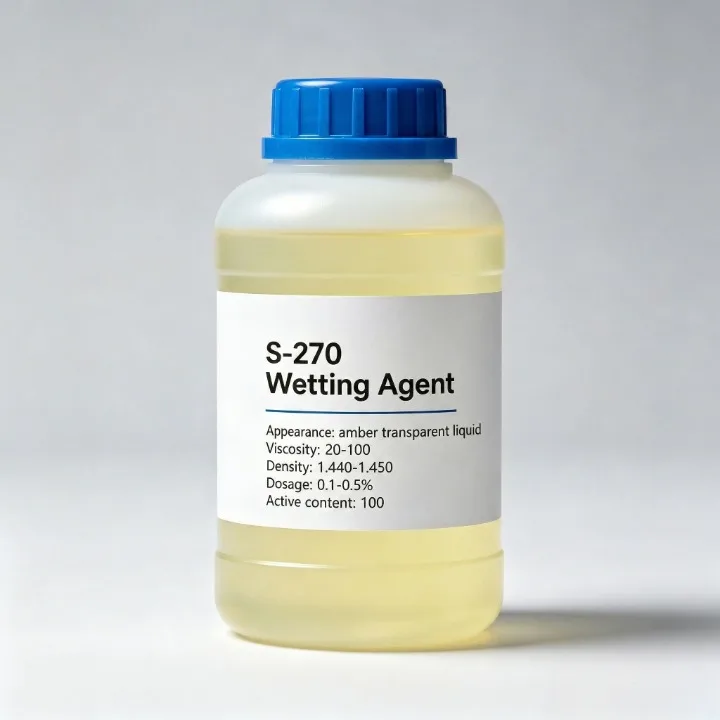
S-270 Wetting Agent: A polyether-modified polymer similar to TEGO 270. It is exceptionally effective for automotive, industrial, and inkjet applications, offering superior compatibility with acrylic and polyurethane resins.
Achieving a Mirror-Like Finish and Degassing
For high-gloss systems where clarity and air release are vital:
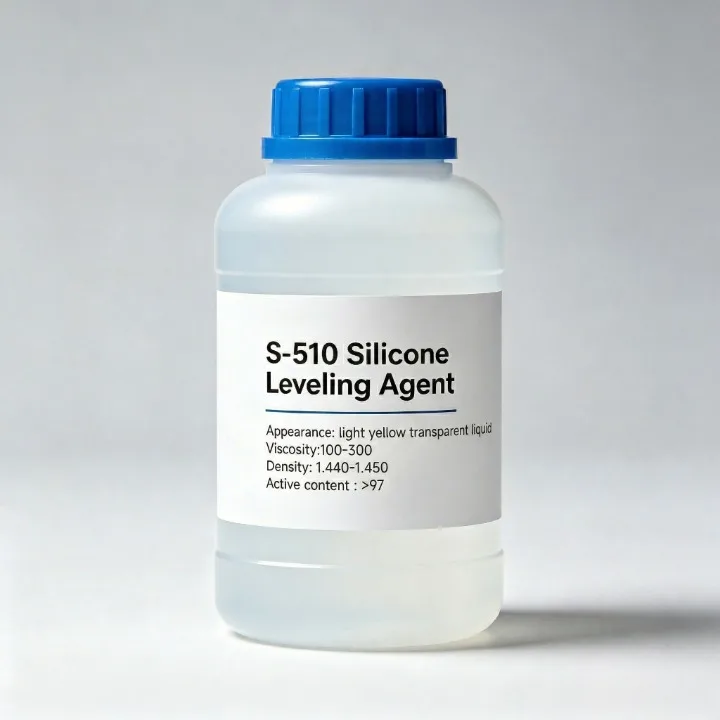
S-510 Leveling Agent: A specially modified polymer that enhances the Distinctness of Image (DOI) and surface gloss. It is ideal for automotive OEM and repair coatings because it does not migrate or cause haze.
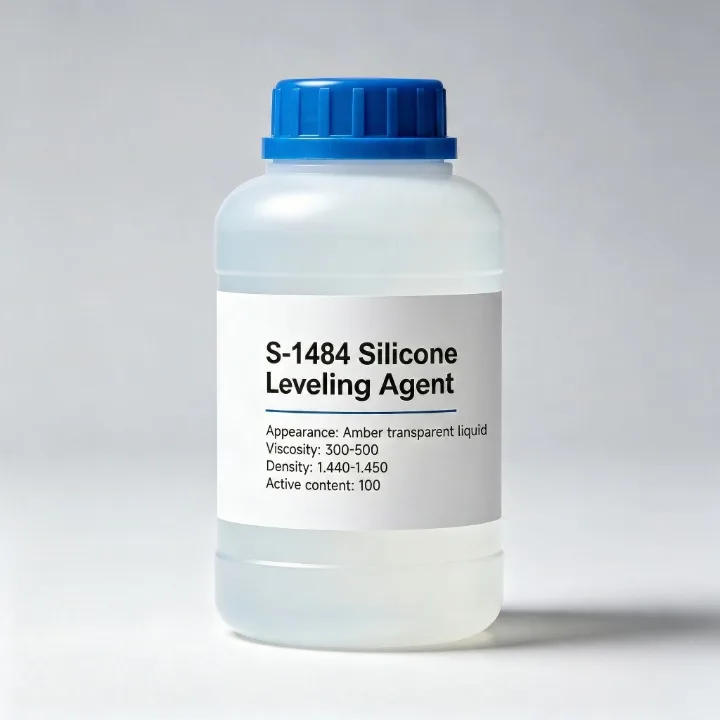
S-1484 ซิลิโคน Leveling เจ้าหน้าที่: Specifically engineered for high-solid systems, it balances leveling with powerful degassing properties. It promotes the rapid release of micro-foam to ensure a bubble-free, mirror-like finish.
Enhancing Surface Slip and Durability
To improve the tactile feel and scratch resistance of a coating, consider these specialized additives:
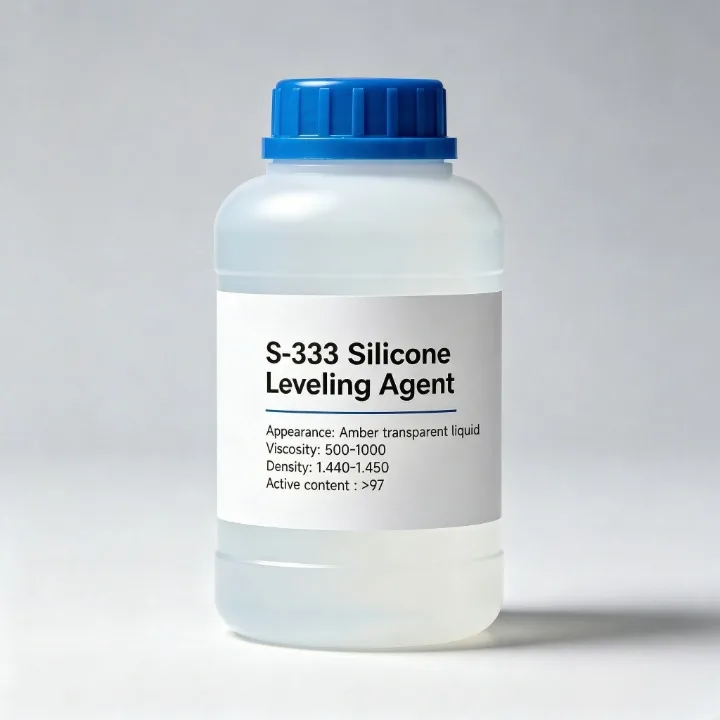
S-333 & S-313: These polyether-modified polydimethylsiloxane copolymers significantly reduce the coefficient of friction. S-333 is a classic choice for slip and wear resistance, while S-313 offers premium tactile feel without compromising inter-coat adhesion.
S-432 & S-410: S-432 excels in substrate wetting and smoothing for inks and UV applications. S-410 is a versatile slip agent that improves surface toughness and prevents pinholes across diverse chemical systems.
S-450 Silicone Leveling Agent: This additive prevents the formation of Bénard cells, ensuring uniform pigment orientation and enhanced gloss.
Specialized High-Temperature Solutions
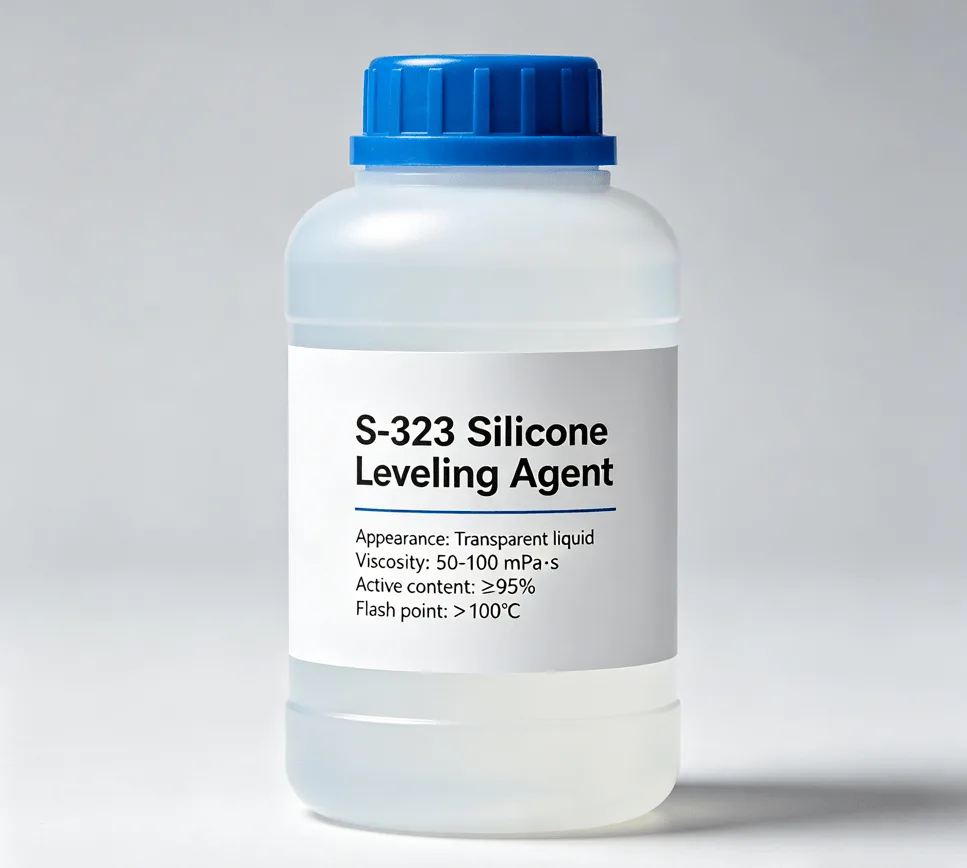
S-323 ซิลิโคน Leveling เจ้าหน้าที่: Designed for solvent-based systems like coil and furniture coatings, it offers exceptional thermal stability up to 250℃. It is particularly effective in matte systems for proper matting agent orientation.
4. Key Technical Parameters
- S-6081: Light yellow to amber transparent liquid with a viscosity of 20-100 mm²/s at 25°C and 100% non-volatile content.
- S-1484: Light yellow to amber transparent liquid featuring a viscosity of 300-500 mm²/s and a density of 1.440-1.450 at 25°C.
- S-510: Light yellow transparent liquid with a viscosity of 100-300 mm²/s and a non-volatile content exceeding 97%.
- S-333: Light yellow to amber transparent liquid with a viscosity of 500-1000 mm²/s and a density of 1.440-1.450.
- S-270: Light yellow to amber transparent liquid with a viscosity of 20-100 mm²/s and a density of 1.440-1.450.
5. Usage Tips and Best Practices
- Dosage: Always follow the "less is more" principle. Standard dosage typically ranges from 0.01% to 0.5% of the total formula. For UV and water-based inks, the dosage may increase to 0.3%–1.0%.
- Incorporation: Add these agents during the paint mixing stage to ensure optimal distribution throughout the system.
- Storage: Store in airtight containers in a cool, dry place. Most SailAdditive products have a shelf life of 24 months
Achieving the perfect surface is a science of precision. If you are facing wetting, leveling, or cratering challenges, the SailAdditive team is ready to help you select the ideal solution for your specific resin system. Contact us at 86-13713141735 for technical consultation or to request free samples.