How to Prevent Bubbles in High-Shear Paint Mixing? Pro Solutions for a Flawless Finish

In industrial paint manufacturing, high-shear mixing is essential for achieving a homogenous dispersion of pigments and resins. However, this aggressive process often creates a significant production hurdle: stubborn air entrapment.
If your production line is struggling with persistent bubbles that refuse to break, you are not alone. These air pockets can delay packaging, cause surface defects, and ultimately compromise the quality of your final coating. This guide explores why these bubbles form and how to eliminate them using professional-grade defoamers.
The Core Pain Point: Why High-Shear Mixing Traps Air
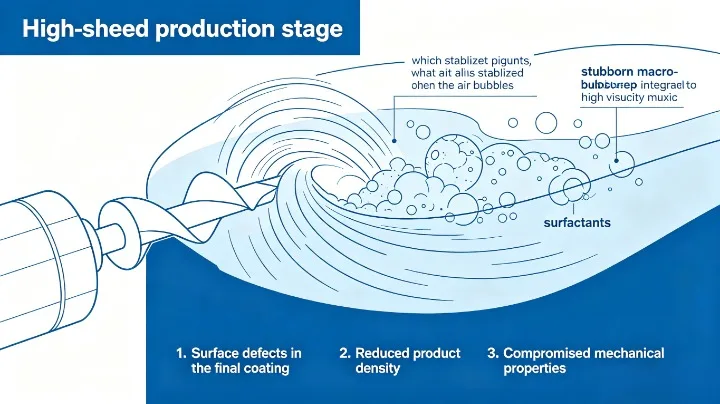
During the high-shear production stage, the rapid movement of the mixing blades creates a vortex that sucks large volumes of air into the liquid. Because many coating formulations contain surfactants to stabilize pigments, they inadvertently stabilize these air bubbles as well.
These "stubborn macro-bubbles" become deeply integrated into the high-viscosity mixture. If you don't treat them, they can lead to:
Production Delays: Waiting for foam to settle naturally wastes valuable time.
Structural Weakness: Trapped air creates micro-voids in the cured film, reducing its protective capabilities.
Surface Defects: Remaining air can cause shrinkage cavities or "fish-eyes" during the application phase.
The Solutions: Engineering Precision with S-6814 and S-6830
To combat foam during intense manufacturing, you need a defoamer engineered for rapid "bubble-breaking". At Sail Additive, we recommend two high-performance solutions depending on your system's chemistry:
1. S-6814: The Silicone-Free Powerhouse
For systems where silicone sensitivity is a concern, S-6814 is the ideal choice. This silicone-free defoamer rapidly eliminates both macro-bubbles and micro-foam generated during high-shear phases. Its unique chemistry ensures maximum interlayer adhesion, making it perfect for multi-coat industrial painting.
2. S-6830: The Polyether-Modified Silicone Specialist
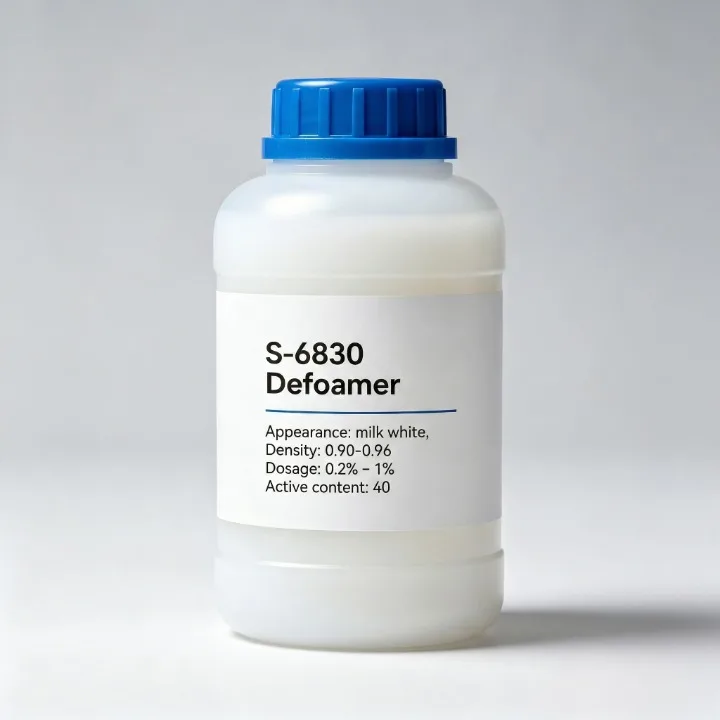
If you are working with water-based systems or require exceptional compatibility across diverse resins, S-6830 is highly effective. As a polyether-modified silicone polymer, it reduces surface tension inconsistencies to prevent surface defects. It specifically targets air generated during high-shear application and manufacturing.
Technical Implementation: Dosage and Incorporation
Achieving a bubble-free mixture requires more than just the right chemical; it requires proper technique. Both S-6814 and S-6830 follow strict professional guidelines to ensure optimal performance:
Strategic Incorporation: You should always add these defoamers during the paint mixing stage. Adding them early ensures the additive distributes evenly throughout the formulation before high-shear forces reach their peak.
Precise Dosage: For most industrial formulations, the recommended dosage is between 0.1% and 1% of the total formula.
Physical Properties: Both products feature a density of 0.90-0.96 g/cm³, allowing them to balance effectively within your system.
Conclusion: Streamline Your Production with Sail Additive
Don't let air entrapment slow down your manufacturing process or degrade your surface finish. By integrating specialized defoamers like S-6814 and S-6830 into your mixing stage, you can ensure a smooth, stable, and aesthetically pleasing film every time.
Want to see the difference in your own lab? Visit SailAdditive.com to explore our full range of surface additives or contact our technical team to request a sample today.