Mastering Defoamers: The Ultimate Guide to Bubble-Free Coatings and Inks

In the world of coatings and inks, appearance is everything. Nothing ruins a high-quality finish faster than surface bubbles. Manufacturers view foam as a primary enemy, as it compromises both the aesthetic appeal and the structural integrity of the final film.
To achieve a flawless finish, you must understand how bubbles form and how to select the right defoamer to eliminate them.
Where Do Bubbles Come From?
Before choosing a solution, you need to identify the culprit. Common sources of foam in coatings include:
- Mechanical Agitation: High-speed mixing during production.
- Chemical Reactions: Gases released during the curing process.
- Substrate Surface: Air trapped in porous surfaces being displaced by the liquid.
- Environmental Factors: Humidity and temperature fluctuations.
- Application Techniques: Improper spraying or rolling methods.
The Science of Defoaming: How It Works
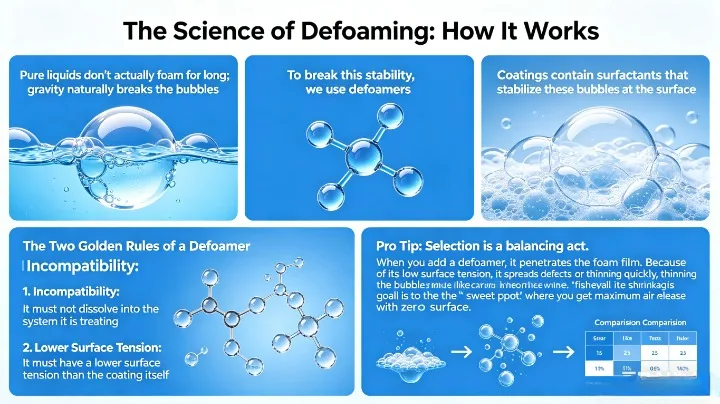
Pure liquids don’t actually foam for long; gravity naturally breaks the bubbles. However, coatings contain surfactants that stabilize these bubbles at the surface. To break this stability, we use defoamers.
The Two Golden Rules of a Defoamer
For a compound to effectively kill foam, it must meet two physical criteria:
- Incompatibility: It must not dissolve into the system it is treating.
- Lower Surface Tension: It must have a lower surface tension than the coating itself.
When you add a defoamer, it penetrates the foam film. Because of its low surface tension, it spreads quickly, thinning the bubble wall until it collapses.
Pro Tip: Selection is a balancing act. If a defoamer is too incompatible, it creates defects like "fisheyes" or shrinkage holes. The goal is to find the "sweet spot" where you get maximum air release with zero surface defects.
Summary: Finding the Right Balance
Are you struggling with microfoam in a water-based system or shrinkage holes in your solvent-based topcoat? Identifying the source of the air and matching the surface tension is your first step toward a perfect, bubble-free finish.
Choosing the right defoamer is a science of molecular design. To help you achieve the strongest defoaming effect without compatibility issues, we offer our high-performance S-Series:
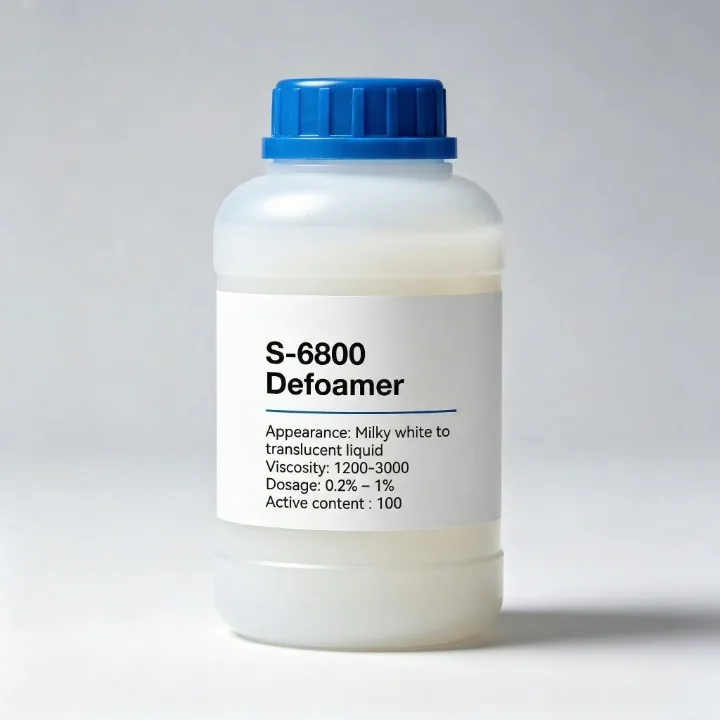
- S-6800 (Polysiloxane Mixture): Designed for solvent and solvent-free systems; a high-quality alternative to Deuchem 6800.
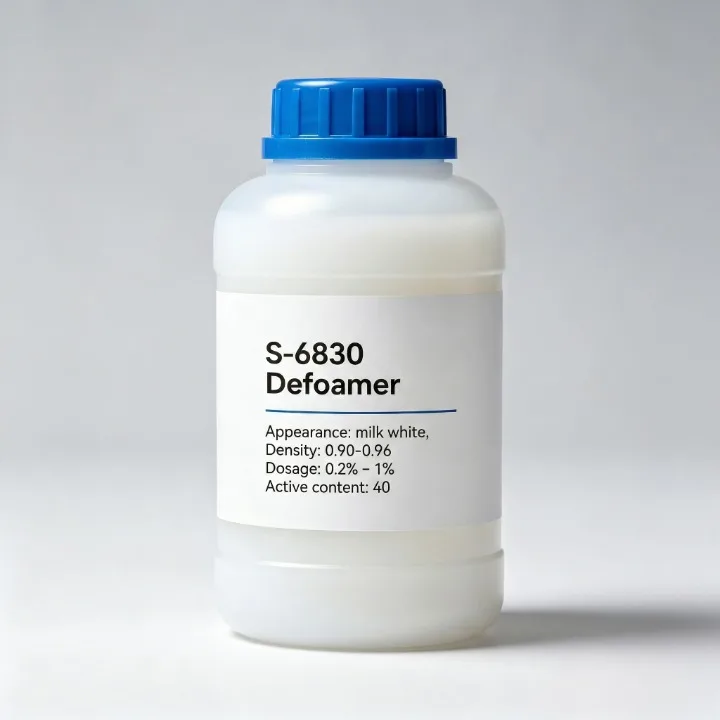
- S-6830 (Silicone Lotion): A premium water-based defoamer that provides excellent stability and easy incorporation.
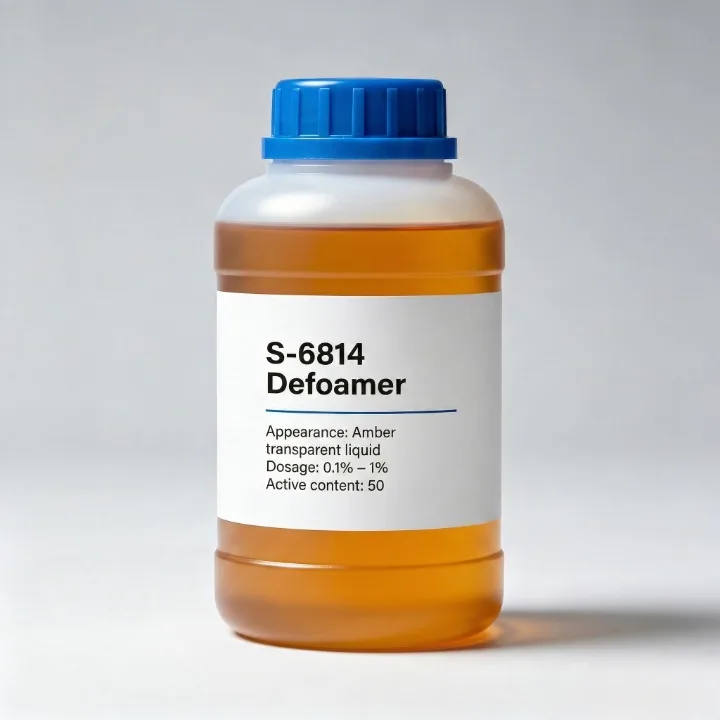
- S-6814 (Non-Silicon): An oil-based solution for applications requiring zero silicone content to prevent surface defects.
Contact us to find the ideal match for your formulation!